Choosing a name for your company is an exciting but challenging process. A name can help define your business, attract customers, and create a lasting impression. However, it’s essential to ensure that the name you choose complies with UK law. This article will guide you through the process of selecting a name that is legally compliant.
- Check for Trademark Infringement
Before deciding on a name, it’s crucial to ensure that it doesn’t infringe on anyone else’s trademark. A trademark is a symbol, word, or phrase used to identify a product or service. It’s important to avoid using a name that is too similar to an existing trademark, as this could lead to legal action against your company.
To check for trademark infringement, you can use the Intellectual Property Office’s (IPO) trademark search tool. This tool allows you to search for existing trademarks and applications, making it easier to avoid potential legal issues.
- Avoid Offensive or Misleading Names
The name you choose for your company should not be offensive or misleading. Offensive names can cause controversy and damage your company’s reputation. Misleading names can lead to confusion among customers and harm your business’s credibility.
The Companies Act 2006 outlines rules on the use of offensive and misleading names for companies. Under this act, a name must not be offensive, and it must not suggest a connection with the government or any other public authority.
- Choose a Distinctive Name
A distinctive name can help your company stand out from competitors and create a unique brand identity. A name that is too generic or similar to other companies’ names can make it difficult for customers to differentiate between businesses.
The Companies Act 2006 also sets out rules on the use of similar names for companies. A company name must not be the same as an existing company or too similar to an existing name that it could confuse or mislead people.
- Consider a Relevant Name
A relevant name can help customers understand what your company does and what services or products you offer. However, it’s important to ensure that the name is not too narrow or restrictive, as this could limit your business’s potential growth in the future.
For example, a company that sells shoes may choose a name such as “Sole Traders” or “Footwear Direct.” These names clearly indicate that the company sells shoes, but they’re not too narrow or restrictive.
- Check Domain Name Availability
In today’s digital age, it’s important to ensure that the name you choose is available as a domain name. A domain name is the address that people use to access your website. If your chosen name is not available as a domain name, it could make it more difficult for customers to find your website.
To check domain name availability, you can use a domain name search tool such as GoDaddy or Namecheap. It’s important to choose a domain name that is easy to remember, easy to spell, and closely matches your company name.
- Check Company Name Availability
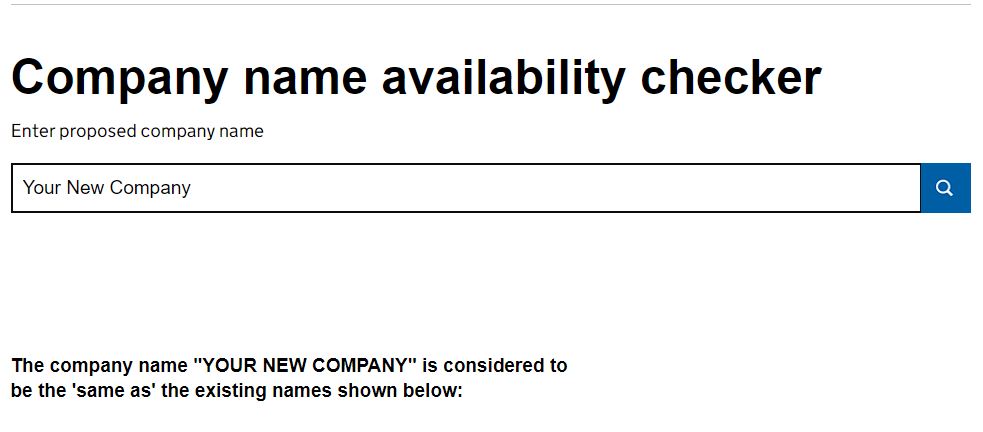
Once you’ve decided on a name, you’ll need to check its availability with Companies House. Companies House is the UK’s official register of companies. It’s essential to ensure that your chosen name is not already in use by another company.
You can check company name availability on the Companies House website. If your chosen name is available, you can register it with Companies House as your company name.
- Register Your Company Name
To protect your company name, you’ll need to register it with Companies House. Registering your company name gives you the legal right to use the name and prevents anyone else from using it.
You can register a company with us by indicating its name and we will check it for the availability of registration.


